Vol. 11 No. 1 (2011): Crossing Listening Paths
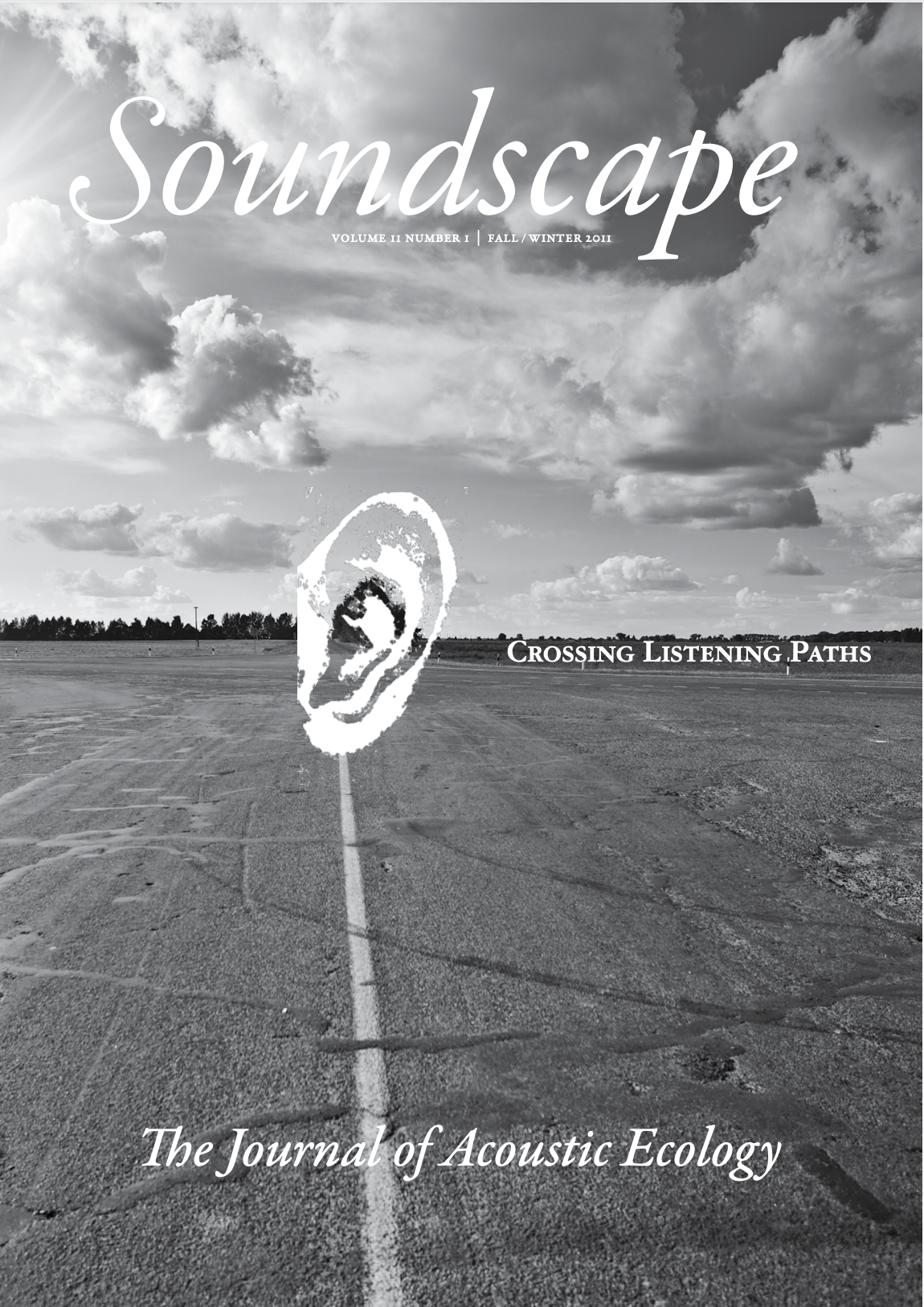
From the World Soundscape Project in Vancouver in the late 1960s to the founding of the World Forum for Acoustic Ecology in 1993, to an expanding Acoustic Ecology movement in the 2010’s… An experimental ecological sound based movement introduced by R. Murray Schafer about half a century ago, today has spread in time and space reaching a stage of maturity associated with an emerging tendency for self-reflection and re-examination of its identity. Its strong association with art, science, and community makes it especially prone to the multiple and profound changes introduced in the above areas since its emergence.
The WFAE 2011 Conference in Corfu Greece with its theme: “Crossing Listening Paths” attempted to address the issue of the current identity of Acoustic Ecology in the context of artistic, scientific and societal changes, as they have been reflected in the field’s actions globally. In an age of complexity, globalization and overspecialization, basic questions about Acoustic Ecology’s identity that appeared worth pondering were:
- What are the “listening paths” taken or invented by acoustic ecology researchers and artists?
- To what extent are there crossovers within and between research and artistic approaches, methodologies, terminology etc?
- Is there an overarching philosophy? Are there overarching values and ethics?
- Is there really a common code or does every researcher/artist/activist address the imbalances in the acoustic environment from his/her own professional and personal perspectives?
The current issue of Soundscape is coming as a complement to the WFAE 2011 Conference, to highlight issues of identity and crossroads in Acoustic Ecology.